– This article was published in the autumn 2015 issue of Fitness Hers magazine.
The readers of our magazine generally take sport seriously and put considerable effort into achieving their ideal physical shape. Naturally, exercise and proper nutrition are essential to achieving a beautiful, physically fit body. Unfortunately, not everything can be achieved through exercise equipment and an iron will. For many women, particularly those involved in fitness professionally, body proportions and aesthetics become increasingly important, and a Shakespearean question arises more and more frequently: “To have implants or not to have implants?” Active discussions take place on internet forums, bloggers debate the subject, and the rest of the media is not far behind: pros and cons, myths and reality, whether or not to have implants. We went directly to the professionals for answers to our questions, as our magazine seeks information exclusively from experts in their respective fields. For this interview, we chose Brit-Carmen Norlan, Manager of Christinas Clinic, which has been successfully operating in the field of plastic surgery for 24 years.
Interviewer: In the course of your work, you have probably encountered all kinds of myths about breast implants. How much truth is there in these stories, and why do they arise?
There have always been many myths surrounding breast implants, primarily due to a lack of information. Reports of ruptured, leaking or displaced implants often describe incidents that occurred twenty years ago, yet the rumours continue to circulate. Very often, these rumours originate from anonymous internet forums that have no access to reliable information.
The first silicone implant was manufactured in 1961, and information about implants began reaching the wider public in the 1990s. It is now 2015, and during this time, the technology, materials and underlying concepts have changed dramatically. Fourth-generation breast implants and their placement are so technologically advanced that it is no longer reasonable to claim that an implant leads a life of its own inside the body and causes abnormal reactions. Like information technology, aesthetic surgery continues to evolve, and no one would think of comparing an old landline telephone with a technologically advanced modern smartphone. (Editor’s note).
Thanks to the latest technological developments, breast implant surgery has become so safe that our patients have developed greater confidence in us, and most of the myths have been dispelled. Nevertheless, we still encounter misconceptions inherited from the past almost daily during consultations and find ourselves having to debunk yet another myth.
I: What are the main prejudices and objections you have encountered?
One of the main factors influencing attitudes towards surgery is the cost of the procedure. Many people have a negative attitude towards aesthetic surgery in general, but they do not usually come to us for consultations. Negative perceptions are also shaped by the small proportion of clients whose wishes go beyond the boundaries of good taste. Most patients who come to us have already decided in favour of breast augmentation. We discuss the technical aspects of the operation, listen to the patient’s wishes and recommend the most suitable method for achieving a realistic result.
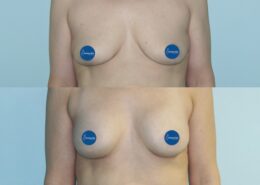
This autumn, our clinic celebrated its 24th anniversary, and our experience now allows us to communicate with clients differently than we did twenty years ago. We now offer a 3D simulation programme that illustrates the potential results of surgery, allowing us to conduct consultations on an entirely different level. Patients can visually assess the potential outcome of the procedure and determine whether it meets their expectations.
I: There is a widespread belief that women can no longer participate in sports after having breast implants. For our readers, this is a particularly significant concern.
Naturally, even with modern technology, breast implant surgery imposes certain minor restrictions, but the belief that women must give up sports is mistaken. At the recent international conference in Belgium dedicated to Motiva breast implants, it was repeatedly emphasised that women in 2015 are fundamentally different from women in 2000. Over the past 15 years, the situation has changed dramatically – at the end of the previous century, approximately 30% of women participated in sports. Today, however, most women engage in some form of physical activity, and some pursue it much more seriously, setting themselves quite ambitious goals.
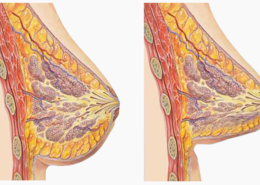
This means that the human body responds to both surgery and implants quite differently than it did 10–15 years ago. At that time, the predominant implant was a bulky implant with a heavily textured surface that effectively became integrated into the body. For example, Allergan (Natrelle) and Eurosilicone, and to some extent Sebbin, Nagor and Polytech, continue to use salt and sugar to create textured surfaces, which can often cause capsular contracture and sometimes even the formation of a double capsule. In the latter case, malignant growths may develop between the capsule walls.
The modern concept differs radically from the previous one – the implant should be completely isolated from the human body and should be able to move freely within the breast. A bulky implant that has become integrated into the surrounding tissue creates problems during exercise – continuous physical activity generates friction that increases over time, leading to excessive thickening of the capsule.
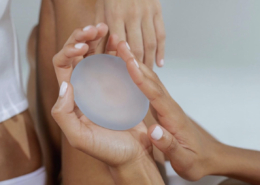
This was the main complication that physically active women could encounter 5–10 years after surgery. When the capsule thickens, the breast may become uncomfortable or even painful due to the lack of space. In such cases, another operation was necessary to surgically remove the capsule. Today, it is known that a different type of implant is ideally suited to physically active women – implants with surfaces treated using nanotechnology and which are as lightweight as possible. The surfaces of these implants are not completely smooth but have a slight texture that provides optimal adhesion to connective tissue. On the one hand, this prevents the implant from shifting, while on the other, it prevents the implant from growing into the connective tissue.
Motiva also manufactures implants equipped with electronic microchips, the first implants in the world to be covered by Lloyd’s insurance. This helps women feel safer and more confident in the event of unforeseen complications. It means that the insurance company is confident in the reliability of the nanotechnology and the long-term safety of Motiva implants. After all, insurance companies do not offer their services unless they are confident in the reliability of a product – something that would have been unimaginable twenty years ago.
Patients should not be concerned about electronic identification. No one will be tracking them, nor will they encounter problems at airports. Today, electronic identification of medical implants is standard practice, as it allows all information relating to the operation to be stored digitally rather than relying on extensive paper documentation.
I: But there are other options for correcting the breasts besides the placement of implants, aren’t there?
That is indeed the case, and we recommend this ourselves – if a woman has sufficient glandular breast tissue, for example, a B or C cup, not to mention a D cup, there is no need for implants. The first priority is to give the breasts an attractive shape and, if necessary, remove excess skin. If the breasts are not too heavy, they will maintain their shape naturally.
We are very concerned by the fact that many women who dream of having large breasts do not actually understand what it means to live with an E cup or how to maintain the appearance of such large breasts in the future. It is far from a myth, but a genuine fact, that the larger the breasts, the more care and attention they require. Otherwise, over time, they will sag, lose their shape and cause considerable discomfort. There is no point in placing such a burden on oneself. Increasingly, women come to us wishing to reduce excessively large breasts. The most important consideration here is proportion, taking into account both waist and hip measurements. Based on these proportions and the individual physical characteristics of each woman, we try to identify the most suitable surgical solution for every patient.
There is also a widespread belief that women who participate in sports professionally cannot undergo surgery in which the implant is placed beneath the muscle, but this is not true. We place implants beneath the muscle in almost all women, as this ensures a more natural appearance, since the implant is covered not only by breast tissue but also by the pectoral muscle. From a technical perspective, this method slightly limits the choice of implant size – generally, the breasts can be enlarged by no more than two cup sizes. If a patient wishes to increase her breast size further, this can be achieved through a subsequent operation, performed at least one year after the first.
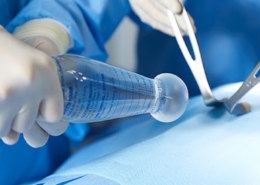
Starting this autumn, we will also begin performing endoscopic surgery, which allows implants to be placed beneath the pectoral muscles through incisions in the armpit area. This method makes it possible to achieve a more aesthetically pleasing result. However, much still depends on the individual characteristics of the patient. It is nothing like the joke made by the presenter of a television makeover show – you put one woman into a tube and a new woman comes out at the other end. In reality, it may be possible to achieve a picture-perfect appearance with one woman, while another may have to accept a much more modest result, as everything depends on the patient’s starting point, physical characteristics and health.
I: One of the main topics of our magazine is body “recomposition”, in which training reduces fat and increases muscle mass – a healthy way to achieve an attractive and physically fit figure. Your clinic specialises in aesthetic “recomposition”, but what about health?
For the past 15 years, our clinic’s motto has been “health and beauty”, and when a patient comes to us for surgery, our decisions are based first and foremost on the patient’s state of health. Only then do we consider the body and its shape, thereby determining the safest approach for the patient.
I: In comparative terms, how many satisfied clients does your clinic have, and what percentage are dissatisfied with their results?
Unfortunately, there are clients with particular characteristics who do not qualify for plastic surgery. Naturally, we listen to all our clients, but if, during the consultation, it becomes apparent that a person does not genuinely understand what aesthetic surgery involves, that their expectations do not correspond to what their body can realistically achieve, and that they expect a perfect body without any scars, as if by the wave of a magic wand, we know in advance that such a client will never be satisfied with the result. We provide these patients with informational materials and send them home to think things through, explaining that miracles do not happen. Once they have reconciled their wishes with reality and we have reached a mutual understanding, we can begin working together. Everything is highly individual, which is why preliminary consultations are so important for both parties. This allows us to achieve an aesthetically pleasing result without compromising the patient’s health.
I: Where is the point at which a woman looks in the mirror and is completely satisfied with her reflection?
This is largely determined by our surroundings – the more athletic, physically fit women we see around us, the more popular this type of appearance becomes. Our women are very beautiful, well-groomed and strive for natural beauty and good health – a wonderful trend. If there is an aesthetic concern that needs correcting, consider how we have our teeth straightened and whitened to achieve a beautiful smile. The same applies to other parts of the body that we cannot change through healthy eating and exercise. This is where aesthetic surgery can help correct imperfections resulting from nature or the passage of time – after all, we should love our bodies, as they are our best friends. Rather than striving for unrealistic goals, it is better to consult a specialist and find an aesthetic solution that is right for you – after all, we have extensive experience in this field!

 https://www.christinasclinic.ee/wp-content/uploads/rinnaimplantaadid-sile-ja-karedapinnaline-implantaat.jpeg
992
1586
cc
https://www.christinasclinic.ee/wp-content/uploads/Christinas-Clinic-LOGO.png
cc2026-05-06 15:12:122026-05-06 15:12:12Breast Implants, Replacement, and BIA-ALCL: What You Should Know About Old Implants